Hanging Chicken Feeder Buyer's Guide: What to Know

Affiliate disclosure: Some links on this page are affiliate links. If you buy through them we earn a small commission at no extra cost to you. Recommendations are research-driven; we don't claim personal use of every product reviewed. Product prices and availability are accurate as of the date published and are subject to change. Always check Amazon for current pricing before purchasing. Learn more.
Quick Picks
Omlet No Waste Chicken Feeder for Coop
No waste design reduces feed spillage and cost
Buy on AmazonHarris Farms 1000293 Galvanized Hanging Poultry Feeder, 15 lbs, Metal
Galvanized metal construction resists rust and weathering
Buy on AmazonLittle Giant® Hanging Metal Poultry Feeder
Hanging design saves ground space in coop or run
Buy on Amazon| Product | Price Range | Top Strength | Key Weakness | Buy |
|---|---|---|---|---|
| Omlet No Waste Chicken Feeder for Coop best overall | $$ | No waste design reduces feed spillage and cost | Limited capacity typical of no-waste feeder designs | Buy on Amazon |
| Harris Farms 1000293 Galvanized Hanging Poultry Feeder, 15 lbs, Metal also consider | $$ | Galvanized metal construction resists rust and weathering | Manual hanging system requires secure mounting point | Buy on Amazon |
| Little Giant® Hanging Metal Poultry Feeder also consider | $$ | Hanging design saves ground space in coop or run | Hanging feeders require secure mounting and regular height adjustment | Buy on Amazon |
| Harris Farms Hanging Poultry Feeder with Twist Lock Base, 10 lb Capacity also consider | $$ | Twist lock base mechanism securely fastens feeder to hanging location | Fixed 10 lb capacity may require frequent refills for larger operations | Buy on Amazon |
| Omlet No Waste Chicken Feeder for Coop also consider | $$ | No-waste design reduces feed spillage and floor scatter | No-waste mechanism may require regular cleaning maintenance | Buy on Amazon |
Hanging a feeder is one of those small decisions that quietly shapes every day you spend with your flock. Once my birds passed six or seven, hand-feeding twice daily stopped being a quick routine and turned into something that had to fit around the rest of life — and that’s before a Vermont January enters the picture. A chicken feeder that keeps feed dry, off the ground, and reasonably protected from rodents does more work than most people realize until they’ve priced a bag of feed after a wet week.
What separates a feeder worth buying from one you’ll replace in a season mostly comes down to two things: how well it controls waste and how well it limits rodent access. Most hanging feeders do a decent job of the first. Far fewer address the second.
What to Look For in a Hanging Chicken Feeder
Capacity and Flock Size
The number on the label — 10 lbs, 15 lbs — refers to how much feed the tube or pan holds at one fill. That sounds simple, but what it means in practice depends entirely on your flock size and whether you’re running a deep-litter coop where you can check the feeder less often, or a smaller setup where you’re out there daily regardless.
A small flock of four to six birds will work through a 10 lb feeder slowly enough that you’re refilling every few days rather than every morning. A flock of ten or more starts to feel different — the feeder empties faster, and if you’ve sized down to keep the cost low, you’ve just created a daily chore that a slightly larger feeder would have eliminated. The math rarely favors the smaller option.
For most backyard keepers running six to twelve birds, a feeder in the 10–15 lb range hits a reasonable balance between manageable weight when refilling and enough capacity to stay ahead of daily demand without constant monitoring.
Waste Reduction
Feed that ends up on the floor of the coop is feed you paid for and the birds won’t eat — it gets wet, it grows mold, and it draws rodents. Standard hanging pan feeders reduce waste compared to ground-level troughs by limiting how much feed the birds can bill out, but they don’t eliminate the problem entirely. Chickens are indiscriminate about tossing feed with their beaks, and a wide, shallow pan gives them room to do exactly that.
No-waste designs address this more deliberately, using narrower openings, raised center cones, or other mechanisms that force birds to eat from a position where they can’t scatter feed sideways. Whether the trade-off in capacity is worth it depends on how much spillage you’re currently dealing with and what your feed costs look like over a season.
Material and Weather Resistance
Galvanized steel is the standard for hanging feeders because it handles moisture better than plain steel, won’t splinter like wood, and is easy to clean. The main trade-off is that metal conducts temperature — a metal feeder in direct sun in July will get hot, and in an open run in January it will be cold to the touch, though neither condition particularly affects the feed stored inside.
Plastic feeders exist and are lighter, but they degrade with UV exposure over time and can crack in hard freezes. For year-round outdoor use in most climates, galvanized metal is the more dependable material. For covered coop interiors with moderate temperatures, plastic holds up longer.
Rodent Resistance
This is the variable most buyers don’t weight heavily enough until they have a problem. A standard open-pan hanging feeder, hung low enough for the birds to reach comfortably, is also accessible to rats at night. The hanging design is better than a ground trough — it removes the easy approach — but a determined rat will climb hardware cloth, chain, or rope without difficulty.
Treadle-based feeders solve this more completely by requiring the bird’s weight to open the lid, but they’re heavier and more expensive. For a hanging feeder specifically, the better approach is a combination of adequate hanging height, a coop secured against rodent entry, and monitoring for signs of nighttime activity. Exploring the chicken feeder options available across different mechanisms is worth doing before settling on a style, especially if rodent pressure is already a known issue on your property.
Top Picks
Omlet No Waste Chicken Feeder for Coop
The Omlet No Waste Chicken Feeder is built around a simple premise: reduce the amount of feed that ends up on the coop floor rather than inside a bird. Omlet designs products specifically for backyard poultry setups rather than commercial operations, and the feeder reflects that focus — it’s compact, coop-scaled, and the no-waste mechanism is integrated into the design rather than added as an afterthought.
Owner reports consistently note that feed scatter drops noticeably after switching to this feeder from a standard hanging pan. For keepers who’ve been replacing bedding more frequently than expected or noticed feed accumulating under the feeder, that reduction is meaningful over a season.
Capacity runs on the smaller side, which is the honest trade-off for the waste-reduction mechanism. For flocks of up to eight or ten birds in a managed coop environment where daily checks are already part of the routine, the Omlet holds its own. For larger flocks or keepers who want to extend the time between refills, that constraint matters more.
Check current price on Amazon.
Harris Farms 1000293 Galvanized Hanging Poultry Feeder, 15 lbs
The Harris Farms 1000293 Galvanized Hanging Poultry Feeder is a straightforward, well-regarded option in the mid-range galvanized feeder category. The 15 lb capacity is the main reason most buyers choose it over smaller alternatives — for flocks of six to twelve birds, a full load can carry a coop several days before refilling is necessary.
Galvanized construction holds up to outdoor conditions reliably, and the hanging design keeps feed elevated off the coop floor where moisture and litter contact would degrade it faster. Verified buyers note the build feels solid relative to other feeders in this price band, with the galvanized seams holding up through multiple seasons without significant rust or deformation.
The open pan design does not restrict rodent access the way a treadle or enclosed feeder would, which is worth naming plainly. If rat pressure is a known issue, this feeder’s design requires the coop itself to do that work through exclusion rather than the feeder mechanism. For well-secured coops, this is a durable, capacity-appropriate choice for small to medium flocks.
Check current price on Amazon.
Little Giant® Hanging Metal Poultry Feeder
The Little Giant® Hanging Metal Poultry Feeder comes from a brand with a long-standing presence in farm equipment, and that heritage shows in the construction approach — straightforward galvanized metal, designed to hang, designed to last. It does the fundamental job of keeping feed elevated and dry without adding complexity.
For buyers who want a reliable feeder without unusual features or a steep learning curve, owner consensus points toward this as a dependable baseline. It installs quickly, holds up through routine outdoor conditions, and the metal construction cleans easily between uses or seasonal disinfection routines.
The one practical note worth flagging: metal hanging feeders conduct temperature, and in very cold climates the feeder can ice up around the edges if condensation is an issue in the coop overnight. This is rarely a feed-access problem in practice, but it’s worth factoring into placement decisions — closer to coop interior, away from drafts, tends to perform better than a run-mounted position in hard winters.
Check current price on Amazon.
Harris Farms Hanging Poultry Feeder with Twist Lock Base, 10 lb Capacity
The Harris Farms Hanging Poultry Feeder with Twist Lock Base distinguishes itself from the standard screw-base or friction-fit feeders through its twist lock mechanism, which secures the base plate to the tube and keeps the feeder from separating if a bird lands on it or the hanging hardware shifts. For keepers who’ve dealt with a feeder coming apart mid-fill or dropping feed across the coop floor, that’s a specific frustration this design addresses.
At 10 lbs, capacity is more limited than the 15 lb Harris Farms option. For a small flock of four to six birds, the difference in refill frequency is minor. For a flock pushing ten or more, the 10 lb ceiling starts to mean daily attention. The stronger case for this feeder is in small, well-managed setups where the mechanical reliability of the lock base is worth more than the extra capacity.
Check current price on Amazon.
Omlet No Waste Chicken Feeder for Coop
This variant of the Omlet No Waste Chicken Feeder shares the same core design philosophy as the first Omlet pick — minimize feed scatter, keep the mechanism coop-appropriate, build it to last — and is suitable for standard coop configurations without modification or additional hardware.
Where this option fits is in flocks where waste reduction is the priority and the keeper is already doing daily or near-daily coop checks as part of their routine. The no-waste mechanism requires consistent cleaning to prevent feed from packing into the opening, particularly in humid conditions where fine-milled feeds can clump. Owners who stay on top of that maintenance report strong long-term performance; those who let it go between checks find the mechanism can restrict feed flow.
Check current price on Amazon.
Buying Guide
Flock Size First, Features Second
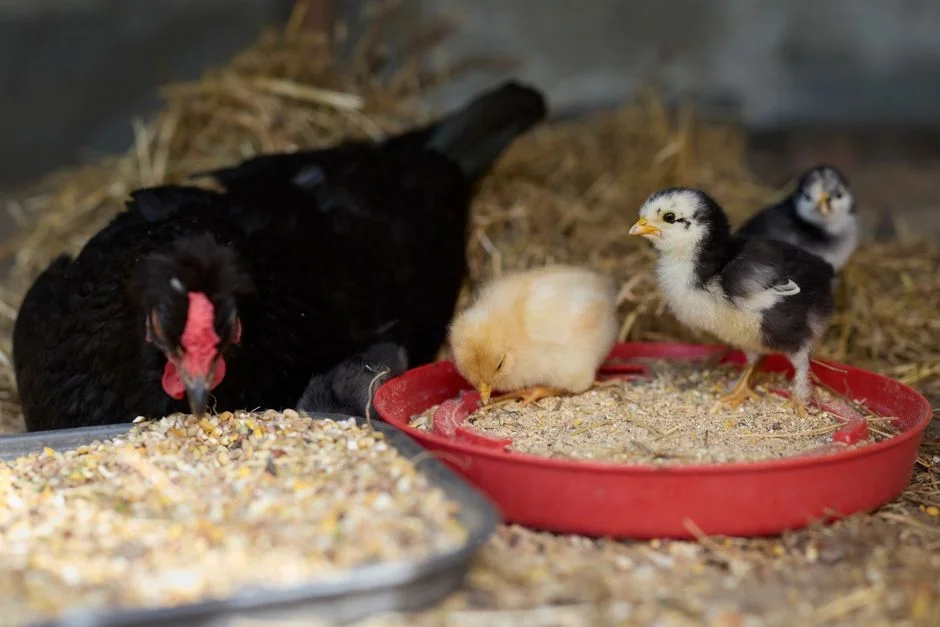
The most common mistake in feeder selection is choosing based on a feature — no-waste mechanism, brand, material — before settling the capacity question. Capacity determines how often you refill. Refill frequency shapes daily effort. For small flocks, this barely registers. For ten or more birds, it starts to matter more than almost any other variable.
A feeder that holds 10 lbs and requires daily refilling is not the right tool for a flock of twelve birds if the goal is to reduce daily chore load. Size to your flock honestly, then layer in the features that matter for your specific setup.
Hanging Height and Stability
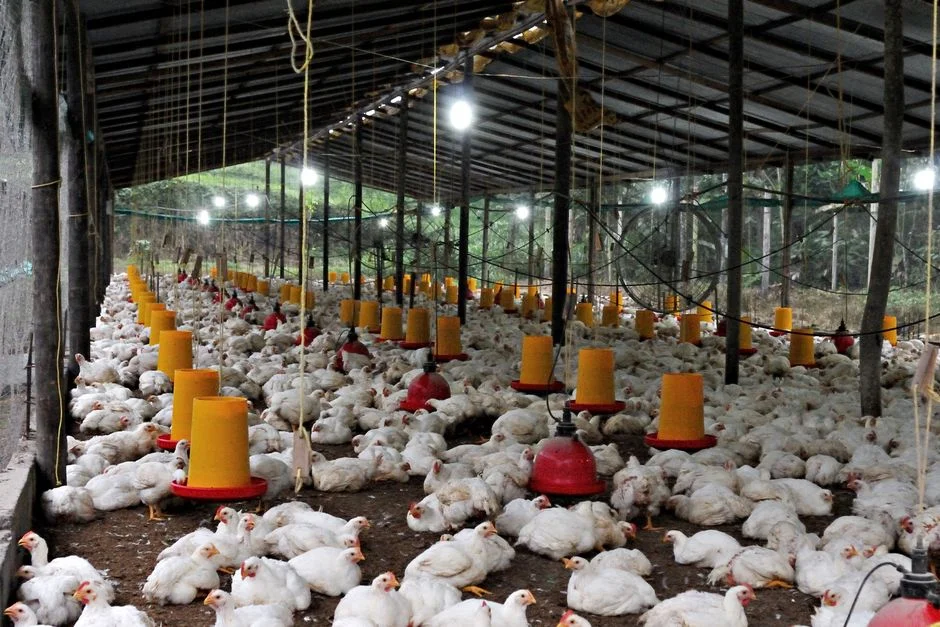
Hanging feeders should be positioned at approximately the birds’ back height — low enough for the smallest bird in the flock to reach the feed comfortably, high enough that the pan or trough isn’t on the floor. That window narrows when you have mixed-size birds in the same space, which is worth thinking through before mounting the hardware.
Stability matters because a feeder that swings freely will scatter feed with every curious peck. A chain that allows significant lateral movement is worse than one mounted with minimal slack. Most hanging feeders come with a simple hook-and-chain system; adding a second attachment point or shortening the chain reduces swing and waste in one step.
Rodent Access and Coop Security
The strongest opinion worth holding here: feed waste and rodent access are the two things that don’t announce themselves until there’s already a problem. By that point, you’re dealing with a rat, not preventing one. A hanging chicken feeder does reduce access compared to ground-level options — it eliminates the easy ground approach — but it doesn’t eliminate it. Rats climb.
The practical framework is this: the feeder controls daytime feed access; the coop controls nighttime security. An open-pan hanging feeder in a coop with gaps in the hardware cloth or an unsecured door is still vulnerable. Rodent-resistant feeders — treadle designs, enclosed systems — add a layer of protection, but they cost more and require training some birds to operate the treadle. For most backyard keepers, a well-secured coop combined with a quality hanging feeder is the more achievable path.
Cleaning and Maintenance
Galvanized metal feeders are the easier material to keep clean. They tolerate scrubbing, don’t hold odors the way plastic can, and dry quickly. The seam where the pan meets the tube is the place to check for feed buildup — fine feed particles and moisture combine there first, and that’s where mold and clumping start.
No-waste feeders require closer attention because the mechanism that reduces scatter can also trap fine feed particles. A stiff brush and a dry-out period between uses is the minimum. For keepers in humid climates, checking the opening weekly during warm months is not excessive.
Material Trade-offs for Your Climate
For year-round outdoor use — run-mounted rather than inside a covered coop — galvanized metal is the more durable material over multiple seasons. It handles freeze-thaw cycles without cracking and holds up to the moisture load of a coop environment without rusting through quickly. The full Chicken Feeder guide covers the range of material options in more depth if you’re weighing galvanized against alternative materials for your specific climate and coop configuration.
For covered coop interiors in mild climates, plastic feeders are a viable alternative at lower cost and lighter weight. In hard-freeze climates, plastic becomes less reliable — it becomes brittle, and the base or tube can crack under stress in temperatures well below freezing.
Frequently Asked Questions
How high should I hang a chicken feeder?
Position the feeder so the lip of the pan or trough sits at approximately the height of the birds’ backs when they’re standing normally. Too low and the birds bill feed out onto the floor; too high and smaller birds can’t reach it comfortably. For mixed flocks with significant size variation, aim for a height that works for the average bird and monitor whether the smallest birds are accessing feed without difficulty.
What’s the difference between a no-waste feeder and a standard hanging feeder?
A standard hanging pan feeder keeps feed elevated off the floor but allows birds to bill feed sideways out of the pan, which ends up as floor scatter. The trade-off is usually capacity and the need for more frequent cleaning of the mechanism.
Will a hanging feeder keep rats out?
A hanging feeder reduces rat access compared to a ground-level trough but does not eliminate it. Rats climb rope, chain, and hardware cloth without difficulty. The hanging design removes the easiest ground-level approach, but a determined rat in an unsecured coop will still reach a hanging feeder. The Harris Farms 15 lb feeder and similar open-pan designs require coop-level rodent exclusion — good hardware cloth, secured doors — to be effective as part of a rodent management strategy.
How often do I need to refill a 10 lb versus a 15 lb hanging feeder?
Refill frequency depends on flock size and the birds’ feed consumption rate, which varies by breed, age, and season. A rough working figure is that laying hens consume around a quarter pound of feed per bird per day. At that rate, a 10 lb feeder supports six birds for roughly six to seven days; a 15 lb feeder extends that to nine or ten days for the same flock. Larger flocks shorten those intervals proportionally — twelve birds will empty a 10 lb feeder in about three days.
Can I use a hanging chicken feeder in an outdoor run year-round?
Galvanized metal feeders handle outdoor conditions reliably through multiple seasons, including freeze-thaw cycles. The main risk in an uncovered run is rain driving into the feed pan, which can cause feed to clump and spoil quickly. A covered run or a feeder positioned under an overhang removes most of that risk. In fully exposed runs without overhead cover, a feeder with a hood or a deeper pan design reduces rain infiltration better than a standard open pan.
Where to Buy
Omlet No Waste Chicken Feeder for CoopSee Omlet No Waste Chicken Feeder for Coop on Amazon