Best Chicken Coops for 10 Chickens: Buyer's Guide

Affiliate disclosure: Some links on this page are affiliate links. If you buy through them we earn a small commission at no extra cost to you. Recommendations are research-driven; we don't claim personal use of every product reviewed. Product prices and availability are accurate as of the date published and are subject to change. Always check Amazon for current pricing before purchasing. Learn more.
Quick Picks
OverEZ Chicken Coop OverEZ Classic Medium Chicken Coop for up to 10 Chickens - Nesting Box - Large Bird, Poultry and Hen House, Made in USA
Made in USA construction suggests domestic quality standards and support
Buy on AmazonGUTINNEEN Chicken Coop with Super Large Wheels for 8-10 Chickens Mobile Duck House 68.1" L with Four Nesting Boxes,
Super large wheels facilitate moving coop across property easily
Buy on AmazonAivituvin Chicken Coop Extra Large Chicken House 55ft² for 10-15 Chickens Outdoor Wooden Hen House Poultry Cage with 6
55ft² capacity accommodates 10-15 chickens comfortably
Buy on Amazon| Product | Price Range | Top Strength | Key Weakness | Buy |
|---|---|---|---|---|
| OverEZ Chicken Coop OverEZ Classic Medium Chicken Coop for up to 10 Chickens - Nesting Box - Large Bird, Poultry and Hen House, Made in USA best overall | $$ | Made in USA construction suggests domestic quality standards and support | Medium capacity may require additional coops as flock grows | Buy on Amazon |
| GUTINNEEN Chicken Coop with Super Large Wheels for 8-10 Chickens Mobile Duck House 68.1" L with Four Nesting Boxes, also consider | $$ | Super large wheels facilitate moving coop across property easily | Mobile design may require regular wheel maintenance outdoors | Buy on Amazon |
| Aivituvin Chicken Coop Extra Large Chicken House 55ft² for 10-15 Chickens Outdoor Wooden Hen House Poultry Cage with 6 also consider | $$ | 55ft² capacity accommodates 10-15 chickens comfortably | Wooden material requires regular maintenance and weatherproofing | Buy on Amazon |
| Deluxe Large Wood Chicken Coop Backyard Hen House 6-10 Chickens with 6 Nesting Box also consider | $$ | 6 nesting boxes support efficient egg collection from multiple hens | Large size may require significant backyard space and installation area | Buy on Amazon |
| Extra Large Wooden Chicken Coop for 8-10 Chickens, Reinforced Outdoor Hen House with Extended Run, 6 Nesting Boxes, also consider | $$ | Reinforced construction suggests enhanced predator protection capability | Wooden construction requires regular maintenance and weatherproofing | Buy on Amazon |
Anyone shopping for a chicken coop for 10 chickens is planning ahead, because a flock rarely holds steady at eight for long. This guide to the chicken coop category compares five options built for that exact range, from simple kit-style houses to reinforced wooden coops with attached runs. I hauled water by hand twice a day every January once my own flock hit fourteen birds, and coop capacity turned out to matter more than I expected going in.
The difference between a coop that holds up and one that doesn’t usually comes down to construction quality, ventilation, and predator protection, not square footage alone. Buyers should weigh how a coop handles real weather and real predators before they weigh nesting box count or overall size.
What to Look For in a Chicken Coop for 10 Chickens
Space Per Bird and Real Capacity
Manufacturer capacity numbers assume birds tolerate close confinement, which they do, but not happily. A coop rated for ten chickens should give each bird roughly three to four square feet of interior space, with additional run space beyond that for daytime movement. Treat the stated capacity as a ceiling, not a comfortable target, especially for larger breeds.
Flocks also tend to grow. A keeper who starts with six hens and loves the hobby is very likely to end up closer to ten within a couple of seasons, so sizing up from your current flock rather than to it avoids a second coop purchase down the line.
Predator Protection Built Into the Structure
Hardware cloth over windows and vents, secure latches that raccoons can’t work open, and a solid floor or buried apron all matter more than paint color or trim. Chicken wire alone stops chickens from leaving; it does very little to stop a determined predator from getting in. Look for coops that specify hardware cloth or welded wire rather than standard poultry netting.
Latches deserve particular attention. Raccoons have hands capable of working simple hook-and-eye closures, so spring-loaded or carabiner-style latches are worth the small extra cost.
Ventilation and Insulation for Real Weather
A coop needs airflow at the roofline to move moisture out even in winter, when the instinct is to seal everything shut. Trapped humidity causes frostbite on combs faster than cold air does. Ridge vents or gable vents positioned above roost height let moisture escape without creating a draft at bird level.
Insulation matters more in genuinely cold climates than manufacturers’ marketing usually admits, and a coop with thin single-wall construction will need supplemental strategies in a hard winter regardless of what the listing promises.
Nesting Boxes and Egg Collection Efficiency
For a flock of ten, four to six nesting boxes is a workable ratio, since hens will share favorites regardless of how many boxes are available. Boxes should be elevated off the floor, dark, and accessible from outside the coop for easy collection without disturbing the birds.
Mobility vs. Permanent Placement
Some coops are designed to stay in one spot for years; others are built to be moved across a yard to fresh ground. A mobile coop reduces mud and manure buildup in one area but adds wheel maintenance and a lighter overall build. A stationary coop can be built heavier and better insulated, at the cost of needing the ground beneath it managed by hand. Deciding which approach fits your yard before comparing specific models on the chicken coop hub will save time.
Top Picks
OverEZ Classic Medium Chicken Coop
The OverEZ Classic Medium Chicken Coop is the strongest all-around choice for a flock at or approaching ten birds, and the case for it starts with where it’s built. Domestic manufacturing tends to mean more consistent lumber quality and more responsive support if a part arrives damaged, which matters for a structure that has to survive years outdoors.
The medium size includes a dedicated nesting box and is sized specifically for up to ten chickens rather than stretched to that number as a maximum. Assembly and ongoing maintenance stay straightforward compared to coops with more elaborate add-ons, which owner reports consistently point to as a reason it holds up well for keepers who aren’t looking to become part-time carpenters.
The trade-off is headroom for growth. A flock that pushes past ten will outgrow this coop’s interior space, and a second coop or an upgrade becomes the more practical path at that point rather than overcrowding this one.
Check current price on Amazon.
Aivituvin Chicken Coop Extra Large
Flocks that are likely to grow past ten birds are better served by the Aivituvin Chicken Coop Extra Large, which offers 55 square feet of interior space rated for ten to fifteen chickens. That extra headroom is the entire argument for choosing it over a coop sized tightly to ten.
Six nesting boxes support a larger flock’s egg collection without birds queuing for the same two boxes, and the wooden construction gives better natural insulation than lighter-gauge builds, along with a more traditional look for keepers who care about how the coop reads in the yard.
Wood requires upkeep that metal and composite coops don’t. Sealant reapplication and periodic hardware checks are part of the ownership cost here, and the larger footprint means confirming yard space before ordering rather than after the boxes arrive.
Check current price on Amazon.
Deluxe Large Wood Chicken Coop
Keepers working with a flock that fluctuates between six and ten birds get the most flexibility from the Deluxe Large Wood Chicken Coop, which is built to handle that range comfortably rather than maxing out at exactly ten. Six nesting boxes keep egg collection efficient even at the upper end of that range.
The deluxe designation reflects in the materials and joinery compared to bare-bones wooden kits, and owner consensus generally rates the fit and finish above entry-level coops in the same size class. For a keeper unsure whether their flock will stay at six or grow toward ten, this is a reasonable middle position that doesn’t require betting on future flock size.
As with any wood coop, the footprint asks for real yard space, and the wood itself needs the same weatherproofing attention as any other wooden structure exposed to seasonal moisture.
Check current price on Amazon.
Extra Large Wooden Chicken Coop with Reinforced Construction
For keepers who have already lost birds to a predator, or who simply don’t want to find out the hard way what their coop can withstand, the Extra Large Wooden Chicken Coop with reinforced construction is the pick worth the extra assembly effort. Reinforced framing and hardware suggest a meaningfully higher bar for keeping raccoons, weasels, and foxes out compared to standard-gauge builds.
The extended run gives birds daytime foraging space without needing a separate run structure built or bought separately, which simplifies the overall setup for a keeper starting from scratch. Wood construction again brings the aesthetic benefits and the maintenance obligations that come with any wooden coop in this size class.
Assembly is a genuine undertaking given the reinforced materials and larger size, so this is a better fit for a keeper with a free weekend and some help than for someone wanting the fastest possible setup.
Check current price on Amazon.
GUTINNEEN Chicken Coop with Super Large Wheels
A keeper whose yard needs the coop to move, whether to rotate onto fresh ground or to relocate seasonally, is the specific buyer the GUTINNEEN Chicken Coop with Super Large Wheels is built for. The oversized wheels are the differentiator here, and they make relocating a coop of this size a one-person task rather than a project requiring a dolly and a second set of hands.
At 68.1 inches long with four nesting boxes, it houses eight to ten chickens without feeling like a scaled-down version of a stationary coop. The mobility comes with trade-offs common to wheeled structures: wheel hardware needs periodic checks, and a coop built to move is generally built lighter than one built to stay put, which matters most in areas with severe winter weather.
Check current price on Amazon.
Buying Guide
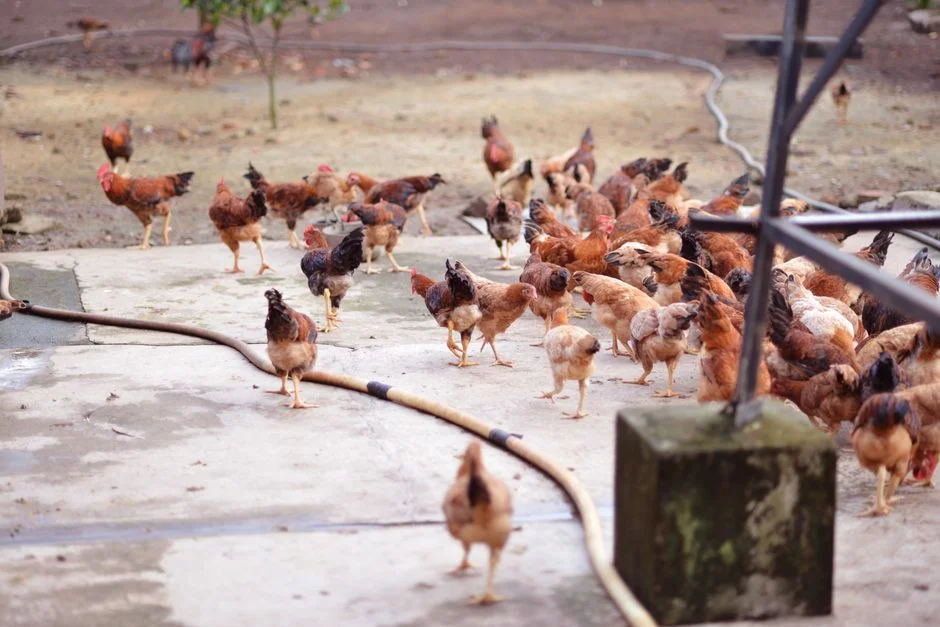
Sizing for Where Your Flock Is Headed, Not Where It Is Now
Almost nobody stays at their starting flock size. Buying a coop rated for exactly the number of birds owned today usually means a second purchase within a year or two, since chicken keeping has a well-earned reputation for being difficult to stop at a round number. Sizing one tier up from a current flock, or choosing a coop with room to expand like the Aivituvin, saves money and disruption later. The chicken coop hub covers sizing math in more depth if flock growth is uncertain.
Predator-Proofing Is Not Optional
A fox took two birds from my flock the spring after my first coop failed, and that’s when predator protection stopped being a feature I compared and became the first thing I check. Reinforced coops, hardware cloth over every opening, and latches that require actual dexterity to open are worth prioritizing over cosmetic details. A coop that looks attractive but skips these basics is a liability dressed up as a bargain.
Material and Construction Quality Over Convenience
The flat-pack coop I started with didn’t survive its first Vermont winter. Cheap construction and no real insulation left it falling apart by spring, and it taught me to stop picking the cheapest option simply because it was the easiest thing to link to. Construction quality shows up in the lumber grade, the hardware, and the joinery, not in the marketing copy, and it’s worth researching owner reports on how a specific coop held up after a full season rather than trusting the listing photos alone.
Placement and Yard Space Before Ordering
Extra-large coops and mobile coops both make specific demands on a yard that are easy to underestimate from a product photo. Measure the intended footprint, account for the run if one is attached, and confirm there’s clearance for maintenance access on every side. A coop that barely fits is harder to clean and harder to predator-proof than one with breathing room around it.
Matching Features to How You Actually Keep Chickens
A keeper hauling water by hand twice a day in winter has different priorities than one running electric waterers, and the same logic applies to coop features generally. Wheels matter enormously to a keeper rotating pasture and not at all to one with a fixed run. Nesting box count matters more to a keeper selling eggs than to one keeping a small flock for the household. Matching features to actual daily habits, rather than to the longest feature list, tends to produce the better purchase.

Frequently Asked Questions
How many nesting boxes do I need for a flock of 10 chickens?
Four to six boxes generally works well for ten hens, since they tend to favor a few boxes regardless of how many are available. The Deluxe Large Wood Chicken Coop and several other options here include six, which gives some buffer during peak laying season. More boxes than that rarely add much practical benefit.
Is a wooden coop better than a metal or composite one for this flock size?
Wood offers better natural insulation and a more traditional look, but it requires ongoing maintenance that metal and composite builds don’t. For colder climates, the insulation benefit often outweighs the upkeep, while in milder regions a lower-maintenance material may be the more practical long-term choice. Owner reports on how a specific coop weathered a full winter are worth checking either way.
Should I choose a stationary coop or a wheeled one for 10 chickens?
A wheeled coop like the GUTINNEEN makes sense for yards where rotating the flock onto fresh ground matters, or where the coop may need to relocate seasonally. A stationary coop can generally be built heavier and better insulated, which favors keepers in harsher climates who don’t need to move it. The right choice depends more on yard layout than on flock size.
How much run space does a 10-chicken flock actually need?
Beyond the coop’s interior square footage, aim for at least eight to ten square feet of run space per bird if the flock won’t free-range daily. Coops with an attached extended run, like the reinforced Extra Large Wooden Chicken Coop, fold that requirement into the purchase rather than requiring a separate structure.
Which handles cold winters better, the OverEZ Classic or the Aivituvin Extra Large?
Both are viable in cold climates, but they solve the problem differently. The OverEZ Classic relies on tighter, well-built construction sized precisely to ten birds, while the Aivituvin leans on wood’s natural insulating properties across a larger footprint. Keepers in harsher climates should supplement either with additional insulation strategies during the worst stretches of winter.
For the full range of sizes and styles beyond this ten-bird focus, see the main chicken coop guide.

Where to Buy
OverEZ Chicken Coop OverEZ Classic Medium Chicken Coop for up to 10 Chickens - Nesting Box - Large Bird, Poultry and Hen House, Made in USASee OverEZ Classic Medium Chicken Coop fo… on Amazon