Best Chicken Coops for 8 Chickens: A Buyer's Guide

Affiliate disclosure: Some links on this page are affiliate links. If you buy through them we earn a small commission at no extra cost to you. Recommendations are research-driven; we don't claim personal use of every product reviewed. Product prices and availability are accurate as of the date published and are subject to change. Always check Amazon for current pricing before purchasing. Learn more.
Quick Picks
GUTINNEEN Chicken Coop with Super Large Wheels for 8-10 Chickens Mobile Duck House 68.1" L with Four Nesting Boxes,
Super large wheels facilitate moving coop across property easily
Buy on AmazonGUTINNEEN Large Chicken Coop on Wheels Mobile Wooden Hen House Weatherproof Duck Poultry Cage 67.3" L for 6-8 Chickens
Wheels enable easy repositioning and yard mobility without tools
Buy on AmazonDeluxe Large Wood Chicken Coop Backyard Hen House 6-10 Chickens with 6 Nesting Box
6 nesting boxes support efficient egg collection from multiple hens
Buy on Amazon| Product | Price Range | Top Strength | Key Weakness | Buy |
|---|---|---|---|---|
| GUTINNEEN Chicken Coop with Super Large Wheels for 8-10 Chickens Mobile Duck House 68.1" L with Four Nesting Boxes, best overall | $$ | Super large wheels facilitate moving coop across property easily | Mobile design may require regular wheel maintenance outdoors | Buy on Amazon |
| GUTINNEEN Large Chicken Coop on Wheels Mobile Wooden Hen House Weatherproof Duck Poultry Cage 67.3" L for 6-8 Chickens also consider | $$ | Wheels enable easy repositioning and yard mobility without tools | Mobile design may sacrifice structural rigidity versus fixed coops | Buy on Amazon |
| Deluxe Large Wood Chicken Coop Backyard Hen House 6-10 Chickens with 6 Nesting Box also consider | $$ | 6 nesting boxes support efficient egg collection from multiple hens | Large size may require significant backyard space and installation area | Buy on Amazon |
| CHIKENCOOP 9.8 x 6.5 x 6.5 ft Metal Chicken Coop, Chicken Run with Cover also consider | $$ | Metal construction provides durability against predators and weather | Metal coop requires regular maintenance to prevent rust over time | Buy on Amazon |
| Large Metal Chicken Coop with Hexagonal Chicken Wire, Chicken Coop Run Pen for Yard with Waterproof Cover, Outdoor also consider | $$ | Hexagonal chicken wire design provides secure containment for outdoor flocks | Metal coop may require regular maintenance to prevent rust buildup | Buy on Amazon |
Finding a chicken coop for 8 chickens means balancing floor space, nesting access, predator resistance, and the reality of a backyard that doesn’t exist to accommodate one large wooden box forever. The right chicken coop holds your flock safely, gives every bird room to move without crowding, and holds up through seasons you didn’t fully plan for. What follows is a practical look at five coops that fit the 8-bird range, with notes on what each one does well and where the trade-offs land.
The flat-pack coop I started with didn’t survive its first Vermont winter — cheap construction, no real insulation, and a fox problem that followed. That failure made predator protection and build quality non-negotiable criteria. The five options below reflect those priorities.
What to Look For in a Chicken Coop
Floor Space and Per-Bird Allowance
The minimum standard for enclosed coop space is 4 square feet per bird, and 10 square feet per bird in an attached run. For 8 chickens, that means at least 32 square feet of interior floor space before you account for roost bars and nesting boxes taking up room. Most manufacturers cite their square footage generously — they’re counting the full exterior footprint, not usable interior floor space after feeders, waterers, and ramps are installed.
A coop that claims to fit 8–10 chickens based on a 6-foot length is often accurate only if your birds are bantams or if they spend most of the day ranging outside. For a flock that spends any time confined — during bad weather, predator lockdowns, or molting — real per-bird space matters more than the headline capacity number.
Nesting Box Count and Access
The standard guidance is one nesting box per four hens, meaning an 8-bird flock needs at minimum two boxes, though three or four reduces competition during the morning laying rush. Hens don’t cooperate with shared box schedules the way the math implies. Having an extra box available prevents pileups that lead to broken eggs and stress.
Equally important is how you access those boxes. External egg collection doors — hinged panels on the coop’s exterior — let you collect eggs without entering the run or disturbing the birds. A coop where egg collection requires opening the main door, stepping into the run, and reaching into a box that’s not at a comfortable height will feel inconvenient quickly. Look for doors that latch securely; raccoons learn to open simple hook latches without much effort.
Predator Resistance
Hardware cloth — welded wire mesh with small openings — is meaningfully different from chicken wire, which is designed to keep chickens in, not predators out. Foxes and raccoons push through chicken wire over time. Hardware cloth with openings no larger than ½ inch, fastened with screws and washers rather than staples, is the standard for serious predator protection.
Beyond the wire, examine the coop’s door latches, flooring, and the gap between panels. A fox took two of my birds the spring after the coop failed, and the entry point was a gap that looked negligible. Flush-fitting panels, buried or predator-apron flooring, and dual-action latches on all access points are worth verifying before you buy. Exploring the full range of chicken coop options before settling on one style is worth the time — what works in suburban fencing differs from what holds up in a rural yard with active wildlife pressure.
Weatherproofing and Ventilation
These two needs exist in tension. A coop needs ventilation to prevent ammonia buildup and respiratory illness, but that same ventilation can become a cold-air source in winter if it’s not positioned correctly. Vents should sit high on the coop wall — above roost height — so air exchange happens without cold drafts hitting roosting birds.
Wood construction requires regular treatment with a weather-resistant sealant or paint to prevent rot, particularly on the roof and any horizontal surfaces where water sits. Metal construction avoids rot but introduces rust risk and heat retention in summer. Check whether the manufacturer’s weatherproofing applies to all exposed surfaces, including the underside of roost bars and the interior of nesting boxes.
Mobility vs. Permanence
A stationary coop can be built heavier, with a fixed foundation or hardware-cloth apron buried underground. A mobile coop trades some of that structural rigidity for the ability to rotate it across the yard — moving it onto fresh ground prevents parasite and ammonia buildup in one spot and gives your lawn a chance to recover. The right choice depends on your yard size, soil conditions, and how much of a role pasture rotation plays in your management.
Top Picks
GUTINNEEN Chicken Coop with Super Large Wheels for 8-10 Chickens
The GUTINNEEN Chicken Coop with Super Large Wheels is built around one practical premise: a coop that 8–10 birds can live in and that two people can move without a tractor. The 68.1-inch length gives it a genuine claim to the 8-bird range, and the four nesting boxes mean the morning laying rush distributes without fights over a shared box.
Owner reports consistently note that the wheel size makes the difference on real terrain — soft ground, lawn, uneven grading. Smaller-wheeled coops tend to sink or catch; these move. The trade-off is that wheel hardware in outdoor conditions needs attention across seasons: bearings, axle connections, and any moving parts are the first things to go in wet climates.
For a flock manager who practices pasture rotation — moving the birds onto fresh ground every week or two — this coop’s mobility is its primary justification over a fixed structure. The four-box configuration and the 8–10 bird capacity make it the strongest all-around choice in this group for active management.
Check current price on Amazon.
GUTINNEEN Large Chicken Coop on Wheels Mobile Wooden Hen House
The GUTINNEEN Large Chicken Coop on Wheels shares the same brand and mobility philosophy as the larger model above but comes in at 67.3 inches and is rated for 6–8 chickens rather than 8–10. For a flock of exactly 8, the practical difference is that you’re at the upper edge of the rated capacity rather than comfortably within it.
Weatherproof construction is a meaningful claim here — verified buyers note that the wooden panels shed water without warping in moderate climates. Vermont winters would push that further than most, and a seasonal treatment with exterior wood sealant is the kind of maintenance that extends the life of any wooden mobile coop. The mobile frame trades some structural rigidity compared to a fixed coop on a foundation, which shows in how the coop flexes slightly when rolling across uneven ground.
The case for this model over the larger GUTINNEEN is primarily footprint: if your yard can’t accommodate the longer unit, this one brings most of the same features in a tighter form. For a flock of 6–7 it’s a solid choice; for 8, it’s worth noting you’re at capacity.
Check current price on Amazon.
Deluxe Large Wood Chicken Coop Backyard Hen House 6-10 Chickens with 6 Nesting Boxes
Six nesting boxes is the standout feature of the Deluxe Large Wood Chicken Coop, and it’s one that matters for a flock in the 8–10 bird range. Owner consensus on this design points to well-fitted panels and a roofline that sheds water without the pooling issues that show up on flat-roofed wooden coops. The capacity range — 6 to 10 birds — means 8 birds fall comfortably in the middle rather than at the edge.
The fixed design means this coop stays where you put it, which is a trade-off for anyone who manages pasture rotation. What you gain is structural stability: no wheels to maintain, no flex in the frame, and the option to add a hardware-cloth apron around the perimeter for additional predator deterrence. The wood construction requires the same exterior maintenance as any outdoor wooden structure — annual inspection for rot at the base, around door hinges, and under the roof overhang.
For a backyard flock of 8 birds that stays in one area of the yard, this is the fixed-structure option with the strongest nesting-box-to-bird ratio in the group.
Check current price on Amazon.
CHIKENCOOP 9.8 x 6.5 x 6.5 ft Metal Chicken Coop, Chicken Run with Cover
The CHIKENCOOP 9.8 x 6.5 x 6.5 ft Metal Chicken Coop takes a different approach from the wooden coops in this group: all-metal construction, a walk-in run height of 6.5 feet, and an integrated cover rather than a separate purchase. The footprint — roughly 10 by 6.5 feet — gives 8 birds substantially more run space than a compact wooden coop, which matters for flocks that spend significant time confined.
Metal construction handles predator pressure differently than wood. Welded-wire panels resist pushing and chewing more reliably than wooden slats or chicken wire. The rust-prevention question is real — uncoated metal in wet climates degrades — and verifying the coating quality on any metal coop before purchase is worth the time. Owner reports on this model note solid construction with consistent panel alignment, which reduces the gap issues that let small predators through.
The integrated cover is the feature that sets this apart from an open-air run. Rain and aerial predators are managed by the structure itself rather than requiring a separate tarp or netting setup. For buyers who want a single-purchase solution with real run height, this is the strongest metal option in the group.
Check current price on Amazon.
Large Metal Chicken Coop with Hexagonal Chicken Wire
The Large Metal Chicken Coop with Hexagonal Chicken Wire brings a waterproof cover and hexagonal-wire containment together in a stationary run-pen format. The hexagonal wire design offers a finer mesh than standard welded panels in some configurations — worth confirming against the specific product listing, as wire gauge and mesh size vary by batch and listing version.
This is a stationary unit, which means it doesn’t offer the pasture-rotation flexibility of the wheeled GUTINNEEN coops, but it also doesn’t ask you to maintain wheel hardware in outdoor conditions. The waterproof cover is a practical feature for climates where birds are often confined during rain — it keeps the run floor drier, which reduces the ammonia and mud problems that show up in uncovered runs during wet stretches.
For buyers who want a metal enclosure at a mid-range price point without the walk-in height of the CHIKENCOOP, this is a reasonable option. Field reports suggest it assembles straightforwardly. The rust maintenance question applies here as with any outdoor metal structure — a seasonal inspection of connection points and frame joints keeps ahead of deterioration.
Check current price on Amazon.
Buying Guide
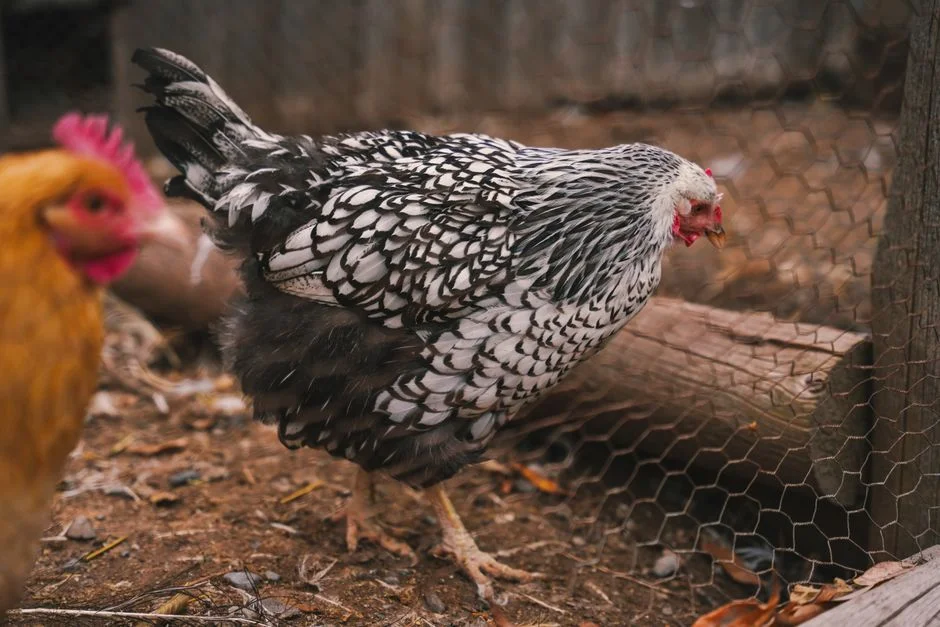
How Much Space 8 Chickens Actually Need
The 4-square-foot indoor / 10-square-foot run rule is a floor, not a target. Birds at minimum space thresholds show more stress behaviors — feather pecking, competition at the feeder, reluctance to use roost bars — than birds with room to establish distance from each other. For a flock of 8, building toward 5–6 square feet of coop floor and 12–15 square feet of run per bird is a better starting point than the published minimum.
Roost bar length matters here as well. Each bird needs 8–12 inches of roost space, which means a coop for 8 birds needs at least 6 linear feet of roost bar. Coops that list 8-bird capacity without specifying roost length often assume birds will double up — which they won’t willingly unless the bar is their only option.
Fixed vs. Mobile: What Actually Matters for Your Yard
Pasture rotation is the primary argument for a mobile coop. Moving the coop every one to two weeks prevents bare patches, reduces parasite load in the soil, and distributes manure more evenly. This requires a yard with enough space to make rotation meaningful — a small urban lot doesn’t have the area to benefit from it.
Fixed coops allow for deeper predator-protection infrastructure: buried hardware-cloth aprons, concrete pads, attached permanent runs. They’re also structurally heavier, which generally means better insulation and more resistance to wind. If your flock stays in one area and your predator pressure is moderate to high, fixed construction offers more protection options than a mobile frame. For anyone still weighing options, the chicken coop hub covers a wider range of formats across both categories.
Wood vs. Metal: Honest Trade-offs
Wood is warmer in winter, easier to modify, and absorbs sound — a meaningful factor if neighbors are close. It requires more maintenance: annual exterior treatment, inspection for rot at ground contact points, and replacement of any panels that have softened from moisture. The flat-pack coop that failed in its first Vermont winter was proof that wood construction quality varies dramatically. The seams, the thickness of the panels, and the quality of the paint or sealant applied at the factory determine how long a wooden coop survives real weather.
Metal coops eliminate rot but introduce rust, heat retention in summer, and a harsher interior environment. A galvanized or powder-coated metal coop in a temperate climate holds up with less intervention than wood, but an uncoated metal coop in a humid environment deteriorates faster than a quality wooden one. Neither material is uniformly better — climate, predator pressure, and maintenance tolerance are the deciding variables.
Nesting Box Count and Morning Logistics
By the time I was hauling water twice a day in January for fourteen birds, I understood that small daily friction compounds. Nesting box competition is the same kind of problem. Hens will wait in line for a preferred box, lay on the coop floor if the boxes feel crowded, or break eggs by piling in together. An extra box beyond the minimum reduces all of that.
For 8 birds, three boxes is a functional minimum. Four boxes — as on the larger GUTINNEEN — eliminates the competition almost entirely. Six boxes, as on the Deluxe Wood Coop, gives a flock of 8 genuine flexibility and leaves room if the flock grows to 10.
Evaluating Predator Protection Before You Buy
The weakest point of most coops isn’t the wire — it’s the latches and the gaps. A standard hook-and-eye latch can be opened by a raccoon in under a minute. Dual-action latches, combination latches, or spring-loaded closures add meaningful resistance. This is a $3–$5 hardware upgrade if the coop ships with a basic hook, and it’s worth doing on arrival.
Gap assessment is harder to do from a product listing, but owner reviews often mention it specifically. Look for reviews that describe predator attempts — how the coop responded is more informative than a manufacturer’s claim of “predator-proof” construction.
Frequently Asked Questions
How much floor space does a coop for 8 chickens need?
The minimum standard is 4 square feet of enclosed coop space per bird, which puts 8 chickens at 32 square feet of interior floor. In practice, 5–6 square feet per bird reduces competition and stress behaviors, particularly during winter when birds spend more time confined. Run space should be at least 10 square feet per bird — 80 square feet for a flock of 8 — and more is consistently better.
Is a mobile coop or a fixed coop better for a backyard flock?
Mobile coops enable pasture rotation, which reduces parasite load and bare patches in the yard. Fixed coops allow for buried hardware-cloth aprons and heavier construction that provides better predator protection. The right answer depends on yard size — rotation requires enough space to move the coop meaningfully — and predator pressure. In rural areas with active fox or raccoon activity, a fixed coop with a secure perimeter is generally the more protective option.
How many nesting boxes does an 8-chicken flock need?
The standard guidance is one nesting box per four hens, meaning two boxes at minimum for 8 birds. Three or four boxes is a more practical target — hens develop preferences for specific boxes and won’t distribute evenly across available options. The Deluxe Large Wood Chicken Coop includes six boxes, which gives an 8-bird flock more flexibility than most coops in this size range and leaves room if the flock grows.
What’s the difference between hardware cloth and chicken wire for predator protection?
Chicken wire is designed to contain chickens, not to resist predators — foxes and raccoons push through it or pry it open with persistence. Hardware cloth is welded wire mesh with smaller openings (typically ½ inch) that resists pushing, chewing, and prying. For coops in areas with active predator pressure, hardware cloth fastened with screws and washers is the meaningful standard. Staple-fastened chicken wire is the construction choice most often cited in owner accounts of predator losses.
Can a wooden coop survive harsh winters?
A quality wooden coop with solid panel construction, a weatherproof roof, and proper ventilation above roost height handles cold winters reliably. The failures tend to happen in flat-pack or thin-panel construction where seams gap, moisture gets in, and the wood softens over a single season. Annual exterior treatment with sealant or exterior paint, particularly at ground-contact points and around door hardware, is what separates a wooden coop that lasts a decade from one that needs replacement after two winters.
If eight birds isn’t quite your number, the main chicken coop guide covers the full range of sizes.

Where to Buy
GUTINNEEN Chicken Coop with Super Large Wheels for 8-10 Chickens Mobile Duck House 68.1" L with Four Nesting Boxes,See GUTINNEEN Chicken Coop with Super Lar… on Amazon