Chicken Tractor Buyer's Guide: Portable Coops Compared

Affiliate disclosure: Some links on this page are affiliate links. If you buy through them we earn a small commission at no extra cost to you. Recommendations are research-driven; we don't claim personal use of every product reviewed. Product prices and availability are accurate as of the date published and are subject to change. Always check Amazon for current pricing before purchasing. Learn more.
Quick Picks
Wooden Chicken Coop, Large Chicken Tractor with Wheels, Weatherproof Hen House with Nest Box and Removable Tray, Mobile
Wooden construction with weatherproof design protects chickens year-round
Buy on AmazonLarge Walk-in Chicken Coop with Chicken Run, Galvanized Poultry Enclosure with Waterproof Anti-UV Cover and Security
Anti-UV waterproof cover provides weather protection for outdoor use
Buy on AmazonCAMMOO Walk in Chicken Coop, 13.1x9.8x6.6ft Chicken Run for Yard with Cover
Walk-in design allows direct access to chickens without crouching or bending
Buy on Amazon| Product | Price Range | Top Strength | Key Weakness | Buy |
|---|---|---|---|---|
| Wooden Chicken Coop, Large Chicken Tractor with Wheels, Weatherproof Hen House with Nest Box and Removable Tray, Mobile best overall | $$ | Wooden construction with weatherproof design protects chickens year-round | Wooden materials require ongoing maintenance to prevent rot and weathering | Buy on Amazon |
| Large Walk-in Chicken Coop with Chicken Run, Galvanized Poultry Enclosure with Waterproof Anti-UV Cover and Security also consider | $$ | Anti-UV waterproof cover provides weather protection for outdoor use | Stationary structure limits flexibility compared to mobile chicken tractors | Buy on Amazon |
| CAMMOO Walk in Chicken Coop, 13.1x9.8x6.6ft Chicken Run for Yard with Cover also consider | $$ | Walk-in design allows direct access to chickens without crouching or bending | Large footprint requires significant yard space for placement | Buy on Amazon |
| Chicken Runs for Yard,79" & 157" Extra Long Foldable Chicken Tunnels for Outside,All-in-One Kit with Sun Protection also consider | $$ | Foldable design enables compact storage and easy transport between locations | Foldable construction may compromise structural rigidity versus fixed runs | Buy on Amazon |
| Chicken Coop Wheels Kit, Heavy Duty Mobile System for Wooden Coops also consider | $$ | Heavy duty construction supports substantial coop weight and frequent relocation | Requires sturdy coop structure; incompatible with lightweight or damaged frames | Buy on Amazon |
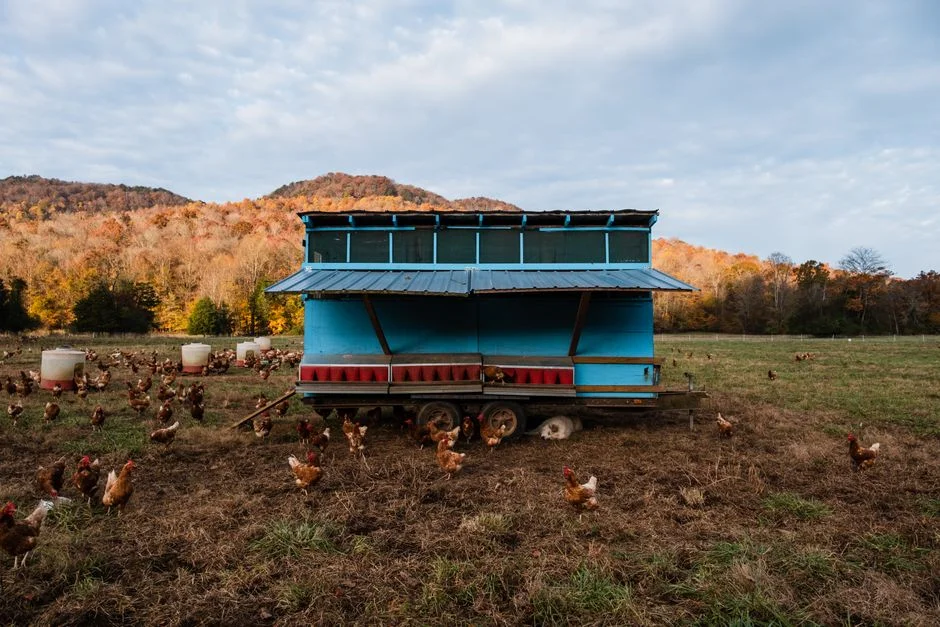
Rotating your flock across fresh ground is one of the more effective things a small-scale keeper can do for both soil health and bird welfare. A chicken tractor makes that possible — a portable or semi-portable structure that combines shelter and a run, moved every few days so birds work new ground and the previous patch recovers. The options range from wheeled wooden coops to foldable tunnel runs, and the right choice depends heavily on flock size, yard layout, and how often you plan to move it.
Not all structures marketed as chicken tractors are genuinely mobile. Some are large stationary enclosures with a cover; others are compact tunnels designed to fold flat. Understanding the difference before you buy saves a lot of frustration.
What to Look For in a Chicken Tractor
Mobility and Ease of Moving
The core promise of a chicken tractor is that you can actually move it. A structure that requires two people, a dolly, and forty-five minutes of effort will stay in one place — defeating the point entirely. Before committing to any design, consider how it moves: does it have wheels built in, or do you need a separate kit? Is the frame light enough to drag across uneven ground, or does its size mean it stays put once placed?
Wheeled systems solve most of the lifting problem. A coop mounted on a dedicated wheel kit can be repositioned by one person in under a minute. Foldable tunnel formats are even more portable but sacrifice structural rigidity. Walk-in stationary enclosures, while spacious, generally require full disassembly or are simply dragged — neither is a long-term rotation strategy.
If your yard has slopes, soft soil after rain, or narrow gates, test-drive the mobility question hard. Wheels that work fine on flat dry ground can bog down in spring mud.
Predator Security
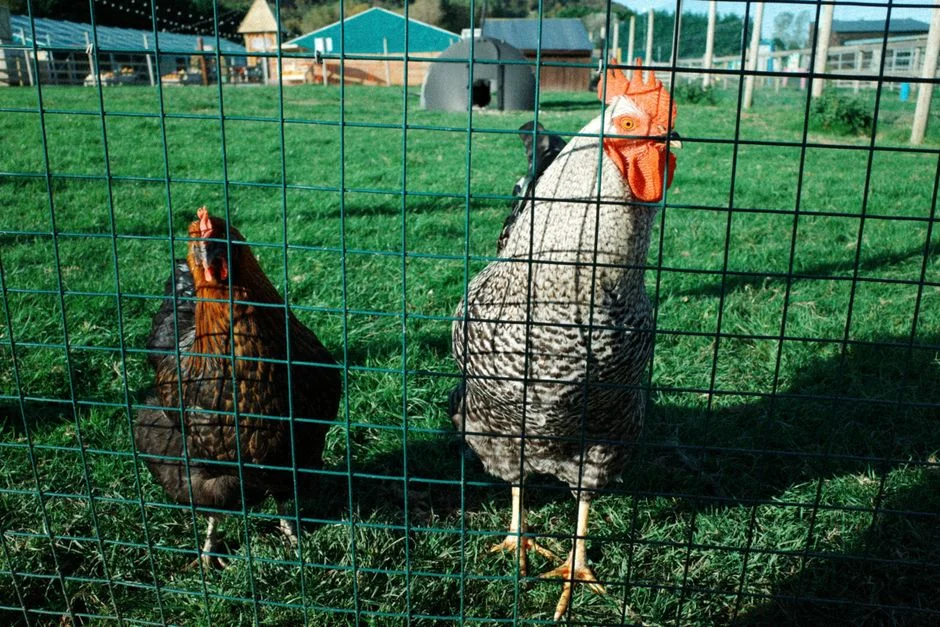
A movable structure that a fox can breach in ninety seconds is not an asset. Hardware cloth (welded wire mesh with small openings) provides meaningfully better protection than chicken wire, which predators can tear through or squeeze past. Check what gauge mesh is used, how the panels connect, and whether there are any gaps at ground level where a determined digger could get under.
Nighttime security is the higher standard. If your birds roost inside the tractor overnight, every gap matters more than it does for a daytime run. Locks on access doors should resist a raccoon — a basic latch does not. Bolt snaps or carabiner-style closures on all entry points are worth adding regardless of what the manufacturer provides.
Some designs include an enclosed sleeping area with a solid floor or deep frame skirt; others are open-bottomed runs only. Know which category you’re buying before committing. Exploring the full range of mobile poultry housing options before settling on a design is worth the time.
Space Per Bird
Overcrowding in a tractor produces stress, feather pecking, and poor pasture rotation results — the birds exhaust a small patch before you move them. The general guideline is 4 square feet of enclosed space per bird and 8–10 square feet of run space, but tractors used for full-time housing need to be on the more generous end of that range.
Measure the actual usable floor space, not the frame footprint. Slanted A-frame walls reduce usable area significantly compared to their external dimensions. A structure that looks large can house fewer birds comfortably than a smaller but more efficiently designed alternative.
Construction and Weather Resistance
Wood offers good insulation and structural rigidity but demands maintenance — untreated or poorly finished timber will rot within a few seasons in wet climates. Galvanized metal frames resist corrosion and require less upkeep but can heat up significantly in summer without adequate ventilation and shade cover.
UV-resistant covers extend the life of any fabric or mesh roof considerably. If the structure will stay outdoors year-round, check whether the manufacturer specifies UV treatment, and factor in whether a replacement cover is available when the original degrades.
Top Picks
Wooden Chicken Coop, Large Chicken Tractor with Wheels
The Wooden Chicken Coop, Large Chicken Tractor with Wheels is the most complete traditional tractor in this list — a wooden-framed structure with an integrated run, a nest box, and a removable droppings tray. Owner reports consistently note that the weatherproof finish holds up better than comparable flat-pack designs, and the combination of nest box and slide-out tray makes daily management noticeably more practical than designs requiring full entry for either task.
The mobility is the real differentiator here. Wheels are built in rather than bolted on as an afterthought, which means one person can rotate the coop across a standard backyard without planning an event around it. Verified buyers note it handles reasonably well on flat ground; on significant slopes, the size works against you.
Wooden construction carries the standard maintenance obligation. The finish will need attention over time, particularly at joints and any horizontal surfaces where water can pool. For a keeper running a small flock on a typical suburban lot and rotating every three to five days, this is a practical, durable option — the structure that most closely matches what people picture when they say “chicken tractor.”
Check current price on Amazon.
Large Walk-in Chicken Coop with Chicken Run
The Large Walk-in Chicken Coop with Chicken Run is a galvanized-frame enclosure with a waterproof, anti-UV cover — a serious structure that prioritizes weather protection and human access over portability. The walk-in design is genuinely useful for anyone managing more than a handful of birds; bending double to reach feeders or check for eggs gets old fast, and the upright access here is a real daily quality-of-life improvement.
Galvanized construction means corrosion resistance is built in rather than painted on. Owner consensus points to the frame holding up well across seasons without the maintenance cycle that wooden alternatives require. The anti-UV cover is a meaningful spec detail — fabric roofs without UV treatment can degrade within a single season in direct sun.
The trade-off is that this is not a tractor in the traditional sense. It does not move easily, and its large footprint means committing to a location. For keepers who want a permanent-adjacent run with the option to manually reposition a few times a season, that trade-off is acceptable. For anyone expecting weekly rotation, this is the wrong format.
Check current price on Amazon.
CAMMOO Walk in Chicken Coop
At 13.1 × 9.8 × 6.6 ft, the CAMMOO Walk in Chicken Coop is the largest structure in this group. The walk-in height accommodates full upright access, the footprint provides genuine movement space for multiple birds, and the included cover addresses both weather and predator exposure from above. For a flock of six to ten birds that spends significant time in a single outdoor run, the space here is meaningful rather than nominal.
The size is also the main constraint. A structure this large requires real yard space and real commitment to a location. Verified buyers with smaller properties flag placement as the primary challenge — it’s not a tractor you’ll be moving weekly, and in a typical suburban backyard, the footprint takes up a significant portion of the available area.
Owner reports on the cover and frame are generally positive for a mid-range structure. Like the walk-in galvanized option above, this is best understood as a generous stationary run rather than a mobile grazing tool — a distinction worth being clear on before purchase.
Check current price on Amazon.
Chicken Runs for Yard, 79” & 157” Extra Long Foldable Chicken Tunnels
The Chicken Runs for Yard, 79” & 157” Extra Long Foldable Chicken Tunnels take a different approach entirely — foldable tunnel sections that pack down for storage and deploy quickly when you want to give birds access to a new patch of ground. The dual-length option is practical: the shorter configuration suits a small space or a quick rotation; the longer format gives a flock more linear foraging range.
The all-in-one kit packaging means no separate sourcing of covers or connectors. Field reports suggest setup is genuinely fast once you’ve done it once. The fold-flat format makes storage and transport easy, which matters if you’re working with limited shed space or moving the setup seasonally.
Sun protection is included, but predator security at night is not this product’s strength. These tunnels work best as a supervised daytime foraging supplement — birds moved out in the morning, returned to a secure coop in the evening. Buyers expecting this to function as an overnight enclosure should reconsider; the foldable construction prioritizes convenience over the structural integrity that nighttime predator pressure demands.
Check current price on Amazon.
Chicken Coop Wheels Kit, Heavy Duty Mobile System for Wooden Coops
The Chicken Coop Wheels Kit, Heavy Duty Mobile System for Wooden Coops is not a coop — it’s the retrofit that makes an existing coop behave like a tractor. If you already have a solid wooden structure that works well but requires two people and a lot of effort to move, this kit is the practical fix. Heavy-duty construction means it supports substantial coop weight, and the design eliminates the manual lifting that makes weekly rotation impractical for most solo keepers.
Installation is the key variable. The kit format is designed to be retrofittable, and owner reports generally confirm that installation is achievable without specialist tools. The caveat is that the coop itself needs to be structurally sound — this kit adds mobility to a solid frame; it cannot compensate for a frame that is already soft or damaged.
Terrain matters here. Wheels that perform well on firm, reasonably flat ground can become a liability in soft soil or on significant grades. Regular maintenance — checking wheel mounts and clearing packed mud from axles — keeps the system working through seasons. For any keeper with a good wooden coop that simply doesn’t move enough, this is the most cost-efficient path to genuine rotation.
Check current price on Amazon.
Buying Guide
Matching Structure Type to Your Rotation Goals
The fundamental question is how often you intend to move the setup. Daily or every-other-day rotation requires genuine mobility — a wheeled tractor or foldable tunnel. Weekly or twice-monthly rotation is manageable with a heavier walk-in structure, provided you have a method for repositioning it. Seasonal relocation is compatible with almost anything, including a structure you simply drag across the ground on skids.
Most buyers overestimate how often they’ll move a heavy structure. A realistic self-assessment here saves money and frustration. If you know weekly rotation is unlikely, a spacious stationary run is probably the more honest purchase.
Flock Size and Space Requirements
Undersizing a tractor is the most common mistake. Birds confined to too little space in a tractor will degrade the ground faster than rotation can recover it — which defeats the purpose of the mobile format. The 4 sq ft per bird (enclosed) and 8–10 sq ft per bird (run) guideline is a reasonable working minimum, but if the tractor will be primary housing rather than a daytime supplement, err toward the higher end of that range.
For meat birds specifically, space requirements are front-loaded — broilers grow fast and need more room toward the end of a grow-out than at the start. A structure that fits comfortably at week three can feel cramped by week seven. The Chicken Tractor For Meat Birds guide covers this in more detail.
Wheels vs. No Wheels
Built-in wheels are worth the premium if regular solo rotation is the goal. A retrofit wheel kit is the practical solution if you already own a solid wooden coop. Foldable tunnel formats are the lightest and most transportable option but sacrifice overnight security.
For A-frame designs — which use a slanted roofline to reduce weight and improve stability on uneven ground — the trade-off against usable interior space is real. The A Frame Chicken Tractor guide covers that format’s specific strengths and constraints in full. Browse tractors with built-in wheels if minimizing the effort of daily or weekly moves is the priority.
Materials and Long-Term Maintenance
Wood requires annual attention — checking and touching up the finish, replacing any soft or rotting sections before they compromise structural integrity. Galvanized metal requires less routine maintenance but benefits from periodic inspection of joints and connection points where corrosion can start. Fabric covers, regardless of UV rating, will eventually need replacement; check whether a replacement cover is sold separately before buying.
Budget for the maintenance cycle the material requires. A wooden tractor that receives no maintenance over three seasons will cost more to repair or replace than the upkeep would have cost annually.
Predator Pressure in Your Area
Local predator pressure should drive your security spec. Raccoons, foxes, and hawks are the common threats across most of the US, but the specific risk profile varies by region. Hardware cloth is the baseline worth specifying. Skirt aprons at ground level deter diggers. Locks on all doors and access panels should resist manual manipulation — raccoons in particular are persistent and dexterous.
If your area has significant pressure from larger predators — dogs, coyotes, or weasels, which can squeeze through openings surprisingly small — the security features of any structure deserve close scrutiny before purchase. A well-chosen chicken tractor can protect a flock adequately in most suburban and rural conditions, but only if the security design matches the local threat level.
Related Guides
Frequently Asked Questions
What is the difference between a chicken tractor and a regular chicken coop?
A chicken tractor is designed to be moved — either on wheels, by dragging, or by folding and redeploying — so birds access fresh ground regularly. A standard coop is fixed in place and typically paired with a permanent run. The mobility is the defining feature; without it, the structure is simply a portable coop, not a grazing management tool.
How many chickens can a chicken tractor hold?
The practical answer depends on whether the tractor is primary housing or a daytime supplement. For primary housing, count on 4 square feet of enclosed space and 8–10 square feet of run per bird as a working minimum. A structure with a 32-square-foot run comfortably handles three to four birds; larger walk-in formats can accommodate six to eight.
Can I leave chickens in a chicken tractor overnight?
Only if the structure provides adequate predator security. Fully enclosed wooden tractors with solid latches are generally appropriate for overnight housing. Open-mesh foldable tunnels are not — they lack the structural rigidity and lock security that nighttime predator pressure demands. Check for gaps at ground level, verify door hardware, and assess the mesh gauge before relying on any structure for overnight protection.
How often should I move a chicken tractor?
Every two to four days is the standard guidance for most backyard setups, though the right interval depends on flock size, ground conditions, and how much forage is available. On productive spring grass, birds can exhaust a small patch in two days. On poorer ground or with a small flock, a week may be reasonable. The goal is to move before the ground is bare and compacted, not on a fixed schedule regardless of what the birds are actually doing.
Is a walk-in chicken enclosure the same as a chicken tractor?
Not functionally. A walk-in enclosure prioritizes human access and bird space over mobility. Most walk-in structures are stationary or semi-permanent — they require significant effort to reposition and are not designed for frequent rotation. The distinction matters because buyers expecting pasture rotation from a walk-in enclosure will likely be disappointed; a dedicated wheeled tractor or a foldable tunnel run serves that purpose more honestly.
Where to Buy
Wooden Chicken Coop, Large Chicken Tractor with Wheels, Weatherproof Hen House with Nest Box and Removable Tray, MobileSee Wooden Chicken Coop, Large Chicken Tr… on Amazon